










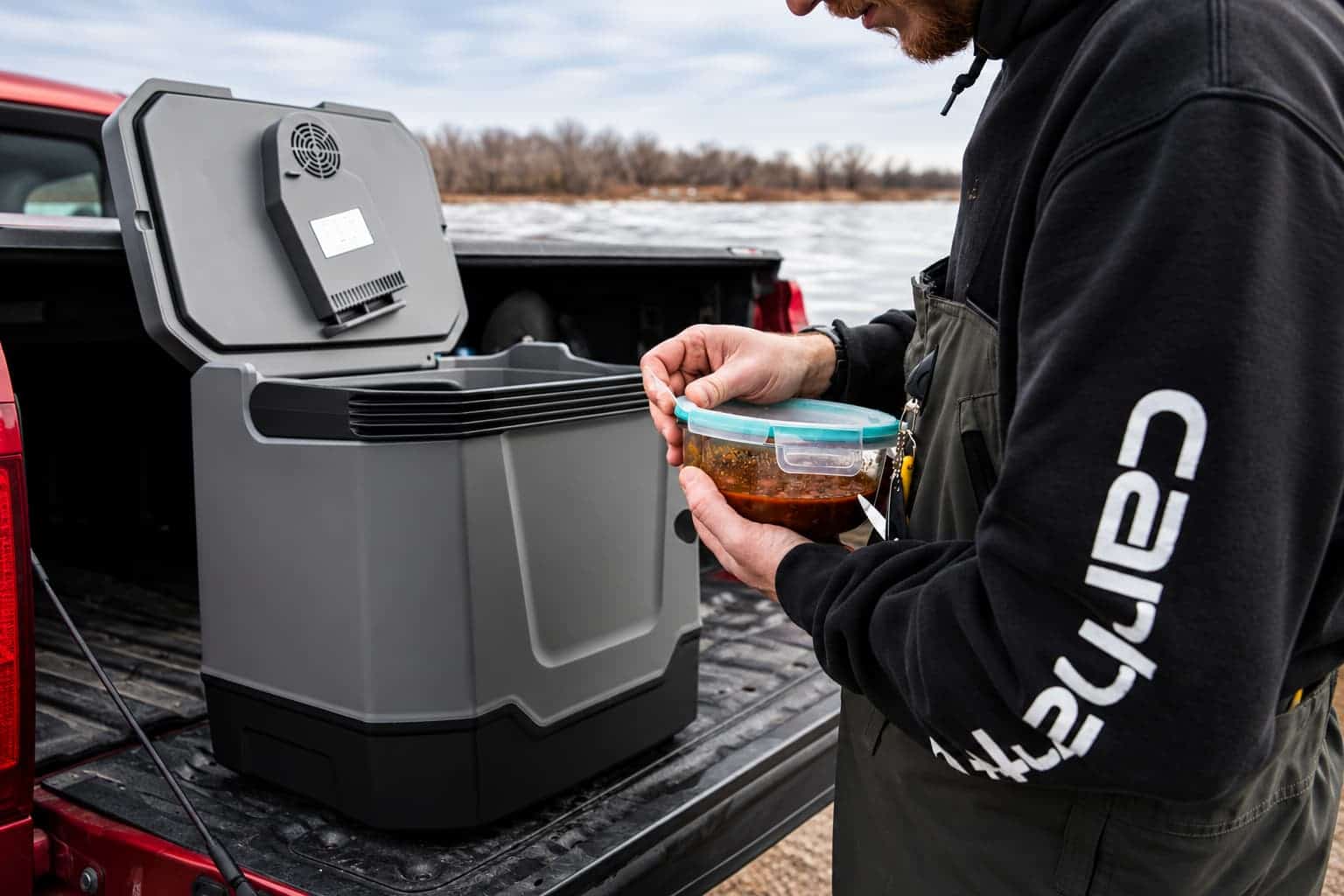
 You pull the cooler open on day three of a trip, and for a half second you hesitate before checking the meat. The ice looks fine, and the drinks are still cold, but something about day three and beyond makes you second-guess whether what is underneath is still safe to eat. If you are trying to store food in a cooler for days without that gut check turning into a real problem, the answer comes down to temperature control, not just ice.
That instinct to double-check is worth listening to. According to the U.S. Department of Agriculture’s Food Safety and Inspection Service, bacteria that cause foodborne illness grow fastest between 40°F and 140°F, and their population can double in as little as twenty minutes. A cooler that looks cold on the outside can still drift into that range on the inside after a few days of lid openings and melting ice.
Keeping food cold isn’t the same as keeping it safe. A cooler packed the wrong way can feel icy to the touch while the food at the bottom sits in standing water at 45°F. The good news is that food safety for a multi-day trip comes down to a handful of habits: how you pack, how often you open the lid, and the cooler you start with.
How Long Can Food Safely Last in a Cooler?
The honest answer depends on the cooler and how you pack it. A basic cooler with a bag of gas station ice usually stays safe for about a day before things start to slide. A well-packed cooler with a mix of ice types can realistically get you two to three days. To stretch that to three to five days, you need a cooler built for it, like our Ranger series, paired with the packing and ice strategy covered below. The goal is the same in every case: keep the inside at or below 40°F, where bacterial growth slows.
What Actually Makes Food Unsafe in a Cooler
Most food safety problems in a cooler come down to a few habits. Temperature fluctuations happen as ice melts and the inside slowly warms, even when the outside still feels cold. Cross-contamination happens when raw meat packaging leaks into water that touches other food. Meltwater spreads bacteria faster than dry contact, so our Ranger coolers have a heavy-flow drain you can empty mid-trip instead of letting standing water pool against food for days. Plus, every lid opening lets in a wave of warm air, and that exchange adds up over a three- to five-day trip.
Keep Your Cooler Below 40°F the Entire Trip.
Consistency matters more than the starting temperature. A cooler that begins at 34°F and drifts to 45°F by day two has already crossed into risk territory, even though it started cold. Ice alone will not hold that line if it is managed poorly, which is why the ice-to-food ratio, the type of ice used, and how often the cooler opens matter as much as how much ice goes in. A tight seal matters here too: the freezer-grade lid gasket on our
Ranger coolers’ freezer-grade lid gasket stops warm air from exchanging at the lid, helping keep the reading steady. A simple cooler thermometer removes the guesswork and tells you exactly where the internal temperature sits instead of relying on how the outside feels.
Separate Raw Meat From Ready-to-Eat Food
Raw meat and ready-to-eat food should never share the same space or meltwater in a cooler. Raw packaging can leak, and once that happens, anything sitting in the same water is exposed to the same bacteria. Sealed, leak-proof containers solve most of this problem on their own, and a dedicated cooler basket keeps food lifted out of standing water entirely, which matters more on an extended trip than a weekend one, since that gap is where most mistakes happen.
Use an Ice Strategy Built for Multi-Day Trips
Different ice types solve different problems. Block ice melts more slowly and holds a stable base temperature longer, so it belongs on the bottom of the cooler. Cubed or bagged ice fills gaps and surrounds food more completely for even cooling throughout. Reusable options like Ice Bergs, stainless steel and insulated with thermal gel, add another layer of cold retention without watering down drinks or food the way standard melting ice does. Combining ice types, rather than relying on just one, turns a two-day result into a five-day one.
Pack Your Cooler in Layers, in This Order
- Start with a clean, pre-chilled cooler, since a warm interior eats into your ice supply before the trip even begins.
- Add a base layer of block ice across the entire bottom, since block ice melts slower than cubes and keeps the cooler’s coldest point lowest, right where raw meat needs it most.
- Place raw meat in sealed, leak-proof containers directly on that base layer, furthest from the lid, so any packaging leaks stay contained and away from food you will not cook before eating.
- Add another layer of ice or reusable ice packs directly over the raw meat to keep a cold barrier between what needs the most protection and everything packed above it.
- Place ready-to-eat items and drinks on top of that ice layer, so the raw meat and the coldest layers underneath stay undisturbed each time the lid opens.
- Fill any remaining gaps with ice, since air pockets warm faster than packed space and create uneven temperatures that let bacteria take hold.
- Keep the lid sealed and the cooler in the shade once it is packed, since unnecessary heat exposure undoes everything careful packing accomplishes.
Limit How Often You Open the Lid
Every time you open the lid, warm air moves in and cold air spills out, and that exchange adds up fast on a multi-day trip. Organize food before you leave so drinks and snacks sit in one predictable spot, cutting down on the digging that happens at each stop. Packing a separate, smaller cooler for drinks, like one of our Cruiser models, protects the main cooler, since you reach for drinks far more often than food that needs to last the full trip.
Keep the Cooler Out of Direct Sunlight
Heat radiating through a cooler’s shell works against everything inside, even with the lid shut. Direct sun raises a cooler’s surface temperature significantly, and that heat transfers inward over hours, not minutes. Shade, a reflective cover, or a vehicle trunk will do more for your ice than most people expect, and elevating the cooler off hot pavement or sand helps for the same reason.
What a Cooler Built for Multi-Day Performance Actually Needs
Not every cooler can hold a safe temperature for three to five days, and that is usually an insulation problem, not a packing problem.
Our Ranger coolers use a double-walled, rotomolded build with a stainless steel hinge system and thick, non-skid rubber feet, the kind of construction behind our published ice-retention figures of multiple days when properly packed, not a single-overnight estimate. The Ranger 125, in particular, was designed with this kind of trip in mind, built to keep large quantities of meat, food, and drinks cold for extended stretches, not just a weekend.
Why Outdoor Adventurers Nationwide Trust Mammoth With Food Safety
We have been building gear for people who spend real time outdoors since 2006, when Mammoth® started by manufacturing tailgate games before moving into the coolers and drinkware we are known for today.
That history shows up in how we approach a product like a cooler built for days, not hours: we design by listening to the people actually using our gear in the field and testing against what else is out there, rather than guessing at what a multi-day trip requires. The Ranger 125 carries a lifetime warranty against defects in material and workmanship, and we are proud to be a veteran-owned business building gear for campers, hunters, anglers, and tailgaters nationwide, wherever their next trip takes them.
Ready to Keep Food Safe on Your Next Extended Trip?
Good habits get you most of the way there, but the right cooler closes the gap between a weekend trip and a five-day one. When you shop our full lineup of high-performance coolers, you get insulation, construction, and ice retention built for extended trips where food safety becomes a real question, not an afterthought.