










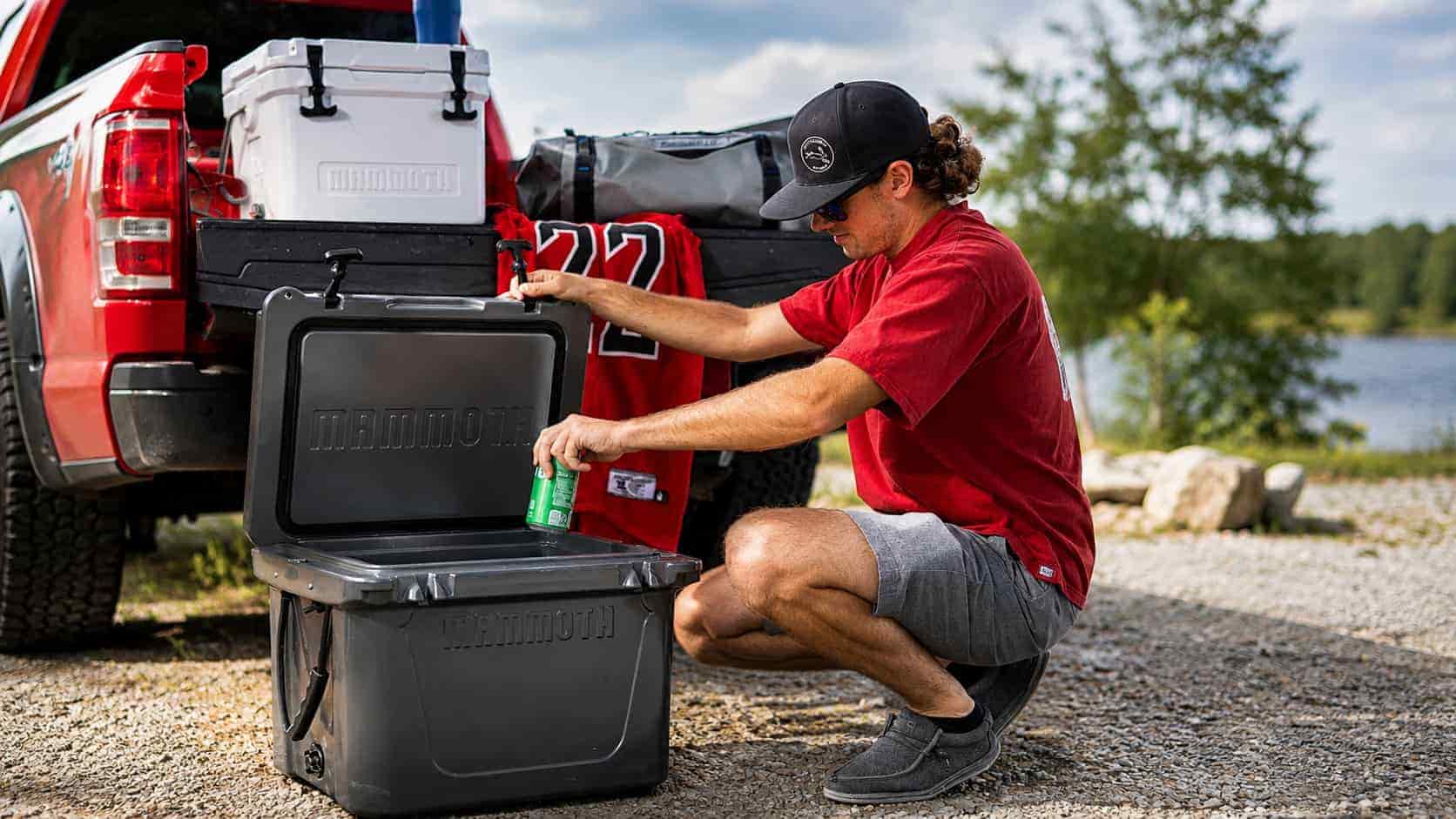
You pack the cooler the night before, ice to the brim, drinks nestled in, lid clicked shut. By day three, you’re digging through lukewarm water for a soda that used to be cold. So how long should a cooler keep ice, really? The honest answer depends on more than the number printed on the lid.
Most people blame the cooler. Sometimes that is fair. Often, though, the real gap lies between how ice retention numbers are measured and how a cooler is actually used out in the field. According to the USDA’s food safety guidelines, bacteria multiply fastest in the “danger zone” between 40°F and 140°F, and perishable food needs to be removed from that zone within 2 hours, or 1 hour if the air temperature is above 90°F.
That is not a marketing number. It is the reason ice retention matters beyond just a cold drink, since the same ice protects whatever food is riding along with it.
What Do Ice Retention Claims Actually Measure?
Every cooler on the shelf lists a number: three days, five days, ten days. Those figures usually come from lab-style testing, a sealed cooler packed to capacity and left closed in a controlled room. That is a reasonable way to compare one cooler’s insulation against another’s, but it looks nothing like a real weekend.
A real trip means a cooler that gets opened a dozen times, sits in direct sun for hours, and runs well under a full load of ice by day two. None of that makes the number dishonest. It is simply a different test than the one most people run in their driveway or at the lake.
Real Ice Retention Looks Different by Cooler Tier
As a rough guide, entry-level coolers with thin walls and no gasket tend to hold ice for one to two days once they leave a controlled environment. Mid-range coolers with tighter seals and thicker foam typically manage two to four days.
Rotomolded coolers built with thick, seamless insulation and a freezer-grade gasket are the ones that genuinely stretch into the four to eight-plus day range, even under regular use. The gap between the bottom and top of that range has less to do with size than with wall construction, sealing, and how the cooler gets used once it leaves the store.
These numbers assume normal outdoor conditions and proper packing, not a sealed lab. A cooler at the top of its tier can still underperform if it sits in the sun all day, gets opened constantly, or starts the trip warm. Likewise, a mid-tier cooler that is pre-chilled, kept shaded, and packed tight can outperform its own average. Everything below examines the habits that move a cooler up or down within its tier.
Heat and Sun Exposure Change the Math Fast
Ambient temperature is the single biggest lever on ice life. A cooler sitting in full sun on a hot dock can run 10 to 15 degrees warmer inside than the same cooler parked in the shade, and that gap compounds hour after hour.
Direct sunlight heats the shell first, and a warm shell spends its energy cooling itself back down before it does anything for its contents. Keeping a cooler shaded, or at least covered, is one of the simplest ways to close the gap between a lab number and a real one.
Every Lid Opening Costs You Ground
Each time a cooler opens, warm air drops in and cold air spills out. It sounds minor, but over the course of a day with a dozen openings for drinks and snacks, it adds up to a meaningfully shorter ice life than a cooler that stays shut between uses.
Packing food and drinks for quick, single-motion access, rather than digging through layers, reduces both how long the lid stays open and how often it needs to be opened at all.
How You Pack It Matters as Much as the Cooler Itself
Air gaps are the enemy of ice retention. A half-full cooler loses cold air to the empty space above the ice, while a fully packed one holds its temperature far longer. Keeping contents organized with a cooler basket built for the Ranger lineup keeps food from floating into the meltwater and helps maintain a tight pack, so the ice stays focused on chilling contents rather than empty air.
Match the Cooler Size to the Trip, Not Just the Group
A cooler that is much larger than what a trip actually requires works against itself, since extra air space means extra room to lose cold before the ice ever gets challenged. Sizing a cooler close to the real need, then filling any remaining space with additional ice or frozen gel packs rather than leaving it open, keeps performance closer to the top of that cooler’s realistic range.
A day at the field or a weekend on the boat calls for something closer to the Cruiser 25, while a week-long trip is where the extra capacity of a larger cooler earns its keep. This matters as much for a single weekend at the lake as it does for a week-long trip, where the difference between a well-matched size and an oversized one can add up to real days of ice life.
Is Your Ice Actually Working as Hard as It Could?
Not all ice performs the same. Block ice melts more slowly than cubed ice because it has less surface area exposed to warm air, so a block on the bottom paired with cubes on top gives quick cooling up front and steady performance for days after. Denser ice also holds up better against agitation from driving or hiking, since smaller cubes break down and turn to water faster than a solid block does.
Insulation and Construction Set the Ceiling
No packing habit beats a cooler that was not built to hold cold in the first place. Wall thickness, the foam inside, and how tightly the lid seals set the ceiling every other habit is working under. Thicker rotomolded walls hold more insulating foam than thinner, injection-molded ones, and a rotomolded shell has no seams where warm air can work its way in over time.
A freezer-grade gasket around the lid closes the last gap that most budget coolers leave open. The Ranger 65, for example, pairs that same double-walled rotomolded construction with a freezer-grade gasket and is built to hold ice for up to eight or more days under normal use, numbers that hold up because the design was there from the start rather than added on afterward.
Why Mammoth Coolers Builds for Real-World Ice Retention, Nationwide
We started building coolers in 2006, and every product since has been designed around one idea: performance that still holds up once it leaves a lab and lands in a truck bed, a boat, or a backyard.
As a veteran-owned company shipping nationwide, we build our hard-sided coolers around rotomolded shells and thick, seamless foam, specifically so the number on the lid more closely reflects what customers actually experience on day four or five, not just day one under controlled conditions. That is the standard we hold every cooler to before it ever leaves our shop.
Ready to Stop Guessing How Long Your Ice Will Last?
Choose a cooler engineered for the real world, not just the lab, and stop budgeting for extra bags of ice on a trip that shouldn’t need them. Shop High Performance Coolers and find the build that matches how you actually use a cooler, not just how it was tested.