










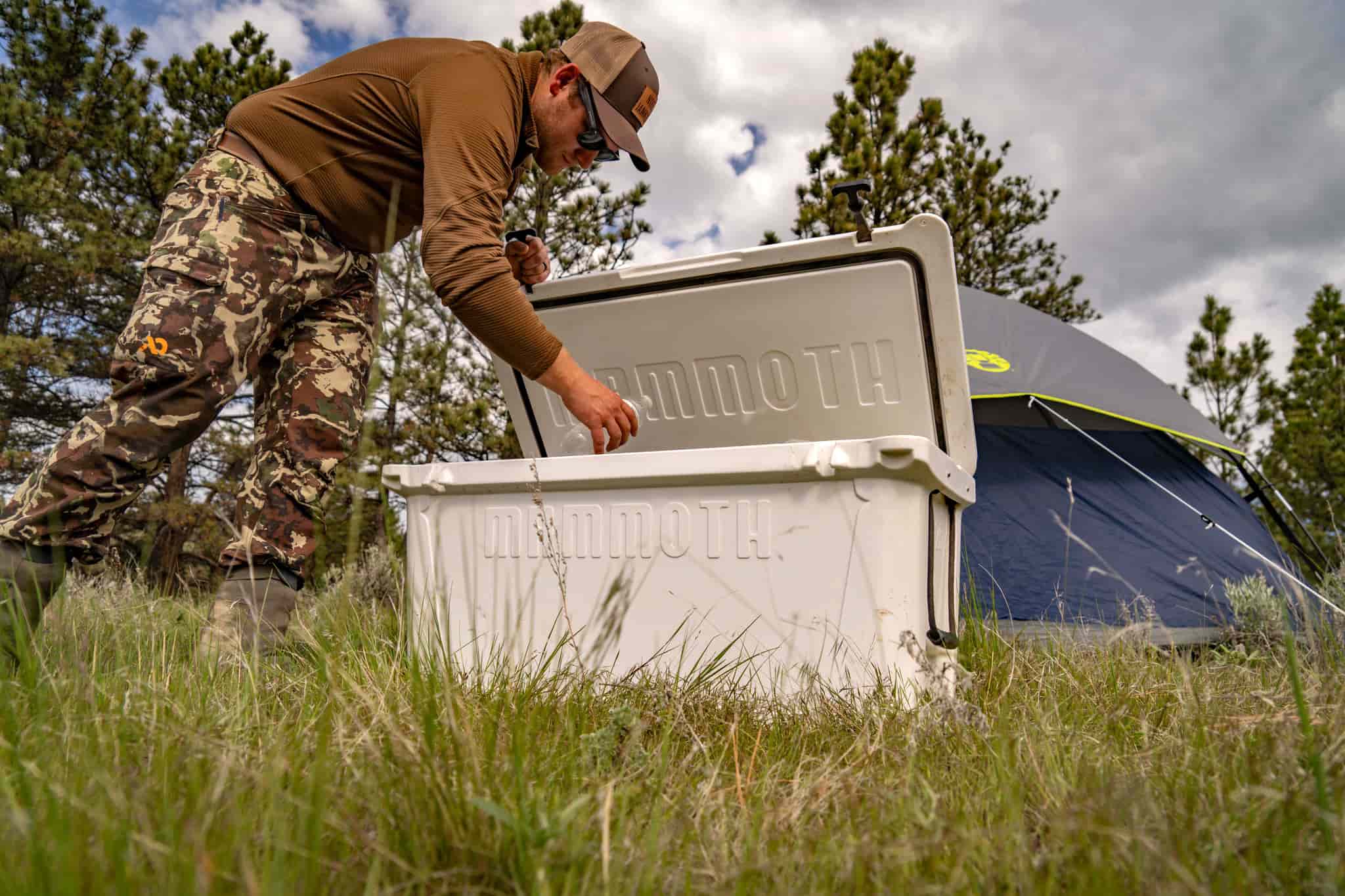
You packed the cooler, grabbed a bag of ice, and headed out. A few hours later, everything is floating in lukewarm water. It is probably not bad luck. It is a combination of avoidable habits and a cooler that was never built to hold ice in the first place.
According to the USDA’s Food Safety and Inspection Service, perishable food can become unsafe in as little as two hours when temperatures rise above the safe range. In direct sunlight or at temperatures above 90°F, that window drops to 1 hour. When ice melts fast, your food safety window closes with it.
Here is why it happens and exactly what to do about it.
Pre-Chill the Cooler Before You Pack It
When you pour ice into a room-temperature cooler, it immediately begins absorbing heat stored in the walls, lid, and floor before it ever touches food. The cooler is keeping your cold before the trip starts. Think of it like trying to cool a hot pan with a handful of ice cubes. Most of the work goes into the pan.
Fill the cooler with a sacrificial bag of ice 6 to 12 hours before your trip, then dump that ice before loading. When the lid closes on an already-cold box, your ice is doing the job it was bought to do.
Use the Right Type of Ice and Layer It Correctly
Standard cubed ice melts faster, not because it is lower quality, but because of geometry. More surface area exposed to warm air means it gives up cold quickly and unevenly. Block ice releases cold slowly because far less of it is in contact with the interior at any moment.
The best approach combines both: block ice at the base for deep, sustained cold and cubed ice packed around food to fill gaps. When the cubed ice goes first, the block is still working. If block ice is unavailable, freezing water in a clean milk jug overnight yields the same result.
How Sun and Heat Destroy Ice From the Outside In
Direct sunlight raises the exterior surface temperature of a cooler far beyond air temperature alone, and that heat transfers directly into the interior regardless of insulation quality. It works from the outside in, and it is faster than most people expect.
Placement fixes most of it. A shaded spot under a tree, canopy, or inside a vehicle removes the primary heat source. Hot ground is just as damaging. Pavement, asphalt, and sand radiate heat upward through the bottom, bypassing the lid insulation entirely. When shade is unavailable, a wet towel draped over the exterior helps buffer the heat before it reaches the walls. The difference between a shaded cooler and one in full summer sun can be a full day of ice retention.
Every Lid Opening Costs You Ice — Here Is How to Minimize It
Each time the lid comes up, warm air floods in and cold air spills out. On a hot day, repeated openings can eliminate hours of ice retention, with no single opening seeming to be the culprit.
Separate contents by access frequency. If two coolers are available, one handles drinks while the other holds food and stays closed most of the day. With a single cooler, keep frequently needed items on top so reaching in is quick. Know what you need before the lid opens, grab it, and close. Every second it is open, cold air is leaving.
Pack the Cooler Tight With Zero Air Gaps
Empty space inside a cooler is a liability. Air pockets warm up almost instantly and pull cold away from the ice. The goal is zero dead space.
Start with ice at the bottom, add food in a tight, organized layer, then fill every remaining gap with more ice before closing the lid. If the cooler is not full, tightly rolled towels fill unused space without wasting ice. A fully packed cooler holds its temperature far more efficiently than one that is half empty.
A Mammoth Cooler Basket helps keep this organized in practice. It lifts food above the meltwater at the bottom, keeps everything dry, and makes layering easier without disrupting the cold zone each time you reach in.
Cooler Construction Determines How Long Ice Lasts
Not all coolers are built for the same job. A standard foam or thin-plastic cooler may hold ice for a day under moderate conditions, but real outdoor heat shrinks that window fast. The insulation simply cannot slow heat transfer enough.
High-performance coolers use thicker insulation, denser materials, and tighter gasket seals. The lid gasket is where many coolers quietly fail. A poor seal means air constantly exchanges between the inside and the outside, no matter how carefully the lid is closed. Rotomolded construction solves another problem by building the cooler body from a single piece of molded plastic, eliminating the seams that cheaper models rely on.
The Mammoth Ranger 45 features double-walled rotomolded construction, a freezer-grade lid gasket, strong rubber latches, a stainless steel hinge, and non-skid feet. It holds 43.6 quarts and is rated for up to 7+ days of ice retention when properly packed. For larger groups or longer trips, the Mammoth Ranger 65 delivers the same build in a higher-capacity size.
Quick Checklist to Stop Ice From Melting Fast
- Pre-chill the cooler 6 to 12 hours before loading by packing it with a sacrificial bag of ice first, so your actual ice goes into an already cold box instead of spending its first hours absorbing heat from the walls.
- Use block ice at the base and cubed ice to fill gaps, because block ice melts far more slowly while cubed ice packs tightly around food and handles surface-level cooling until the block takes over.
- Pack the cooler tightly with no air gaps, which matters because empty space heats up almost instantly and accelerates melting far faster than a fully loaded cooler, where cold has nowhere to escape.
- Keep the cooler out of direct sunlight and off hot surfaces like asphalt or sand, which radiate heat upward through the bottom and can overwhelm even good insulation from a direction most people never think to defend against.
- Open the cooler only when you know exactly what you need, because each opening floods the interior with warm air and displaces the cold air that helps retain ice between uses.
- Separate drinks from food when possible, or keep the food section undisturbed throughout the day, which dramatically reduces lid openings and extends the ice’s effective life.
- Add reusable ice packs alongside block and cubed ice, because they hold temperature longer than loose ice, stabilize internal temperature between restocks, and will not water down drinks as they warm.
- Upgrade to a rotomolded cooler if retention consistently falls short, because differences in wall thickness, gasket quality, and construction can add days to ice life, not just hours.
Built for the Outdoors Since 2006
We have built coolers for the outdoors since 2006, for the people who fish before sunrise, run the river all weekend, and need their food to stay cold without babysitting the cooler. Our coolers are rotomolded for durability, engineered for ice retention, and designed in sizes that fit real trips, from day outings to multi-day expeditions.
Mammoth is built and backed by Rock Ridge Outdoors, a veteran-owned company that puts performance over marketing claims. We do not cut corners on insulation thickness or gasket quality, because the people using our gear in the field cannot afford a cooler that fails at the wrong moment.
Stop Wasting Money on Ice That Melts Too Fast
Every bag of ice you buy to replace what melted early is money spent on a largely preventable problem. The right cooler, packed the right way, makes the difference between managing ice all weekend and not thinking about it at all. Browse our full cooler lineup to find the right size for your next trip, and pick up a set of Mammoth Ice Bergs to keep cold and last longer between restocks.